I would give the opposite advice. The easiest thing you can do to make people like you more, trust you more and respect your opinion more is to dress well and appropriately.
Job's outfit and Zuckerberg's hoodies work the same way (whether that was the intention or not, I think not). The same part of human brains that stupidly subconsciously judges people by the way they are dressed is doing the same thing with them. They show status by being able to openly reject the standard social expectations around clothes.
So call it a psychology hack or a life hack or whatever but if you are a founder of a startup then you are meeting and needing to impress a fair number of people. You can handicap yourself because you are convinced that it "shouldn't matter" or "this is the startup uniform" or you can be pragmatic about it and gain an edge for relatively minor effort.
Along these lines, Steve Jobs didn't wear his iconic turtle neck and jeans when he was just a startup. Markula impressed upon him early that if he didn't dress well, people wouldn't trust him. So steve Jobs wore suits. An bowties. And looked really nice.
I have found a shirt that fits me perfectly so I bought a couple more of these. As long as it's a good fit, you enjoy wearing it, people don't scratch their heads looking at you, why not wear the same thing all the time?
Of course not looking sloppy is important (hair, fingernails, showers, clean clothes, etc.), but other things are much much more important. Integrity, getting things done, an inspiring and/or knowledgable personality..
Also: I don't know why Steve Jobs has to mentioned in every second blog post on HN. Yes, he wore the same clothes all the time. But you don't need his permission to do so. You should be your own boss, and your own fashion consultant. (When in doubt, ask your wife or girlfriend though. ;))
Because it's not considered to be "normal". If you wear the same clothes every time, people will notice and think you are weird. You don't want people to think you are weird if you startup.
> people will notice and think you are weird. You don't want people to think you are weird if you startup.
What a terrible reason not to do something that makes sense to you. If your success in the startup world is so strongly linked with how others perceive your superficialities, that's not a healthy environment to be in. You might as well add "don't be ugly" too, because everyone knows that beautiful people tend to have more success, and you want to maximize your chances of succeeding.
Having a few copies of something that fits you well is a great idea, find something great and buy a couple in a couple different colors as well. But have a couple sets of shirts so people don't notice and, as you said, scratch their heads looking at you.
> but other things are much much more important. Integrity, getting things done, an inspiring and/or knowledgable personality..
Absolutely. I didn't mean to imply that dressing well was actually important in that sense. It's an easy way to have people think you have more integrity, are more knowledgeable/inspiring/interesting, get more things done. Do with that what you will, your competition will.
He's not doing this because he's Steve Jobs, he's doing it because he has a reason for doing it that Steve Jobs had first. Cue joke about "A system and method for dressing a human being."
And man, I just don't know about the rest of that. If you can't wear what you want to because you're doing a startup...
"he has a reason for doing it that Steve Jobs had first" come on. He's an icon but lately people seem to get confused and sounding like he invented half of what the world is today. He did not invent the single shirt behaviour at all. Even my grand grand mother always told us she used to have a bunch of copies of here favourite skirt around, hand made and all, because it was so easy. And she lived already half a century before Jobs was even born.
> he has a reason for doing it that Steve Jobs had first
My point was that the reason only works for steve jobs, mere mortals will be judged for that behaviour. You still "save time" but that's a post-rationalization from someone who dislikes the pressure of dressing themselves if I've ever heard one.
> And man, I just don't know about the rest of that. If you can't wear what you want to because you're doing a startup...
Hey, do whatever you want. I was just pointing out the tradeoff. Also because I find it funny that the same people who would recognize a joke about a "shirt of +2 charisma" are the most least likely to be wearing them or even recognize they exist in the real world.
That reminds me a story which mr. Lukacovic (founder of czech search engine seznam.cz) told cs students several years ago. When he was dealing with investors, he tries to show himself in a "nerdy light" (wearing old t-shirt and jeans) to actually get a better deal. The reasoning behind this was that this would make his partners beleive that they have an advantage, while the opposite was actually true because he indeed has some good fried who advised him in this matter.
So the "phychology hack" can work in both cases. Dressing yourself properly is a good default though.
Haha, that's true for sure. Back when I was young and a freelancer I went to a networking group with mostly non-technical people where the dress code called for a suit. I wore bright red skate shoes with my suit.
I came across as "that young technical wizard" before I even opened my mouth. You should totally use those stereotypes to your advantage when you can.
I thought about adding my thoughts about not overdressing when you need to come across as technically proficient because of the stereotype but thought that would have muddled my point.
This habit is on DidThis action wiki (with other ref. links): https://www.didthis.com/same%20clothes%20every%20day and yes I practice it for my own startup regularly.
SoundCloud Alexander Ljung CEO CoFounder was wearing over and over his black leather jacket with SoundCloud logo on it. He did not try to be Steve Jobs, he was showing his total determination to make his company big.
I agree with you. There's a point where you can get away with wearing the same thing over and over and sure if you are famous like Steve Jobs was, hell that'll become a thing of its own. Hell once you reach the Steve Jobs level celebrity status, no matter what you do will make news. OMG Steve's diet is like this? He must have figured some dark magic. He dresses like that? There must something to it, let us all try... I think a lot of these visionary founders, etc... are very much closer to the normal every day person, it is the obsession of the public that makes them look more clever than they really are and it just snowballs from there. Once you get past a certain level, you can do anything and there will be a big enough group of people who would make a big deal out of it and praise you for whatever it is that you are doing.
This is cargo cultism. Aping dress habits isn't going to imbue you with the attributes that led to success for Jobs.
The lesson a would-be successful person should learn from Jobs is to focus on what's essential. If you become so distracted with trying to copy minor habits, you've missed the point. And Steve Jobs was successful far before he started wearing the same thing all the time, anyway.
That wasn't the reason given though. He didn't say he did it just because Steve Jobs did it. He said that he did it for the same reason that Steve Jobs did it...which is that he doesn't have to think about what to wear.
Nothing, but there are probably many who see him and think "cargo cult"
Mimicking a famous person's eccentricity isn't exactly popular - the folks who idolize SJ will think you're an ass while the folks who hate him will think you're a cultist.
I'd like to see a life so absurdly optimized for productivity that the maximum 10 seconds you save every morning by not having to decide what to wear is worth even mentioning.
The next post will probably be about opening doors more effectively, like Kramer, to save a couple of seconds off the time spent opening doors each day.
Once there was a man named Mr. Artesian and his activity was tremendous,
And he grudged every minute away from his desk because the importance of his work was so stupendous;
And he had one object all sublime,
Which was to save simply oodles of time.
He figured that sleeping eight hours a night meant that if he lived to be seventy-five he would have spent twenty-five years not at his desk but in bed,
So he cut his slumber to six hours which meant he only lost
eighteen years and nine months instead,
And he figured that taking ten minutes for breakfast and twenty minutes for luncheon and half an hour for dinner meant that he spent three years, two months and fifteen days at the table,
So that by subsisting solely on bouillon cubes which he swallowed at his desk to save this entire period he was able,
And he figured that at ten minutes a day he spent a little over six months and ten days shaving,
So he grew a beard, which gave him a considerable saving,
And you might think that now he might have been satisfied, but no, he wore a thoughtful frown,
Because he figured that at two minutes a day he would spend thirty-eight days and a few minutes in elevators just travelling up and down,
So as a final time saving device he stepped out the window of his office, which happened to be on the fiftieth floor,
And one of his partners asked "Has he vertigo?"
and the other glanced out and down and said "Oh no, only about ten feet more."
That reminds me of a short science fiction story, (I think by Isaac Asimov?) but I can't for the life of me remember what the title was. The protagonist was a writer, who began begrudge the time he would wait for his bus and time waiting for red lights and time waiting in general. By virtue of some machine, he was able to get everything in his life in sync, so that he never had to wait for other people or other things anymore. By the end however, he was unable to write anymore because he found that those times of randomness were when he was able to find his inspiration.
The following is a vignette from a series of vignettes on improv by Billy Merritt:
[THUMP, THUMP, CRASH]
The closet door explodes outward and inside the closet there is a 6 foot worm standing upright. It is green with bits of moist hair all over the body. The head of the worm has two giant eyes that always seems to be crying, and pinchers for a mouth. It makes a noise that is a cross between a hiss and a donkey bray.
Creature: What the fuck is that?!?!
MASTER: That is my worm.
Creature: Your what?
MASTER: My worm. We all have them.
Creature: I'm pretty sure I don't have a worm. I think I would know if I had something like that.
MASTER: Yours may not be as big, but you definitely have one, I can tell.
Crerature: How can you tell I have something like that? Is it inside me? Will it kill me? Jesus, get it out of me!
MASTER: EASY. Once you become an improviser, once you feel you have it down enough that you can improvise with anyone at any time. A worm develops inside you.
Creature: You mean once I finally get it, I get this, this worm inside me. I don't want that, it's disgusting.
[the worm weeps a little louder]
MASTER: The worm is all your bad habits. All the rules you break in order to make a scene work. It feeds off of your bad habits it lives off of denials and bad object work.
Creature: Well then don't you want to kill the worm. Your worm is so big.
MASTER: Thank you. You can't kill the worm, just like you can't eliminate all bad habits. Sometimes you have to break the rules in order to further the scene and go where you never thought you could. You must except your worm, you have a symbiotic relationship with it.
Creature: How do you know when you have a worm?
MASTER: You will know. It will speak to you. You will find yourself doing a scene and you will realize that what you are doing is wrong, then a little voice will say "do it, see what happens" , that is the worm.
Creature: Should I always listen to my worm?
MASTER: No, if you feed it too much it will consume you. You need to develop a relationship with your worm, know your worm, know when to let your worm out to play, and also know when to keep your worm inside.
Creature: Why is your worm so big?
MASTER: I'm a level 37 improviser, a shaft of light, My worm has grown along with me. But I still have to control it, make sure it doesn't get out of hand, or out of the closet.
Creature: What happens if you lose your worm, or if it dies.
MASTER: Then you become a improrobot, making automatic responses, and doing automatic scenes. You run a risk of losing your creativity, your life force. You lose the truth.
10 seconds here, 10 seconds there, before you know it you're talking about... I dunno... a minute or so. Can you seriously afford to waste that kind of time?
It's not so much "saving 10 seconds" as it is "avoiding cognitive context switching". If you happen to be thinking about something important, you don't want to interrupt that thought process to look through your clothes and decide what to wear, or what to have for breakfast, or which car to drive, or any number of other trivial decisions. If you can replace those with automatic non-decisions ("take the top shirt out of the drawer") then you can maintain focus.
oh lord..what about trying to be human for atleast some moments of the day instead of behaving like a production robot ?
I bet we have to face hundreds if not thousands of those trivial decisions each day and most arent reoccurring all the time so you cant automate them...
We also choose to avoid making those sorts of decisions when we're focusing on more important things, preferably putting them off for other times. For example, it's common for coders to close their door, not check their e-mail, etc. when they want to be "in the zone".
When I'm getting ready in the morning, I tend to be focused on the important things. In my case, as a stay-at-home dad, the important things tend to be plans for teaching my son and helping him with his disability. I've arranged the rest of my morning to be as automatic as possible so I don't have to think about what clothes to wear or what to have for breakfast.
Incidentally, my son and I were just walking around with buckets on our heads pretending to be robots. Counting robots, not production robots :)
My definition of being rich is being able to spend an inordinate amount of time making these trivial decisions.
I watch my daughters when they go to a local candy store, and they savor making their choices. They literally have hundreds of different items to choose from.
I'll agree. Running on a tight schedule this morning, I wasted a few minutes staring foggy-brained into the closet wondering what would go with what and not unduly duplicate what I wore the day before (and trying to remember what that was). Had to dig thru the dryer to find something suitable. Not a big deal, sure, but it kinda soured the start of the day, derailed whatever I'd rather be thinking of at the moment (was having enough trouble thinking period), and ended up about 15 minutes behind when I wanted to be where.
I've got enough trivial decisions & distractions to deal with. Reducing them is becoming paramount as my schedule, and mind, and life, become ever more crammed with stretches.
I'm seriously thinking of emptying the entire closet and refilling it with matched outfits kept that way. Not going so far as the same thing every day, but there are nice sets which should be in an organized grab-and-go arrangement.
Only in a hacker forum can you read about people wanting to eliminate the need to dress themselves in order to eliminate inefficient use of time.
Let's be realistic: getting dressed is not cognitively draining. Most of us rarely have to dress out of our comfort zone. Get yourself some "go to" outfits that are business-casual and semi-formal, so when the rare time comes when you have to "dress up" (what is that, four times a year?) you know what you're wearing. Other than that, it's jeans and t-shirts. When they all fit, you don't have to worry about what you happen to pick that day. I've never spent 15 minutes choosing what to wear in my life, and yet I've never been compelled to wear the same outfit on consecutive days.
>It's not so much "saving 10 seconds" as it is "avoiding cognitive context switching".
Humanity FAIL. As if you have some very crucial things to decide on the 15 minutes you spend waking up, dressing, shaving and such...
What "context switch"? You are not an OS, and you are not even fully awake, heck you're not even awake before coffee, much less just after you woke up.
> "As if you have some very crucial things to decide on the 15 minutes you spend waking up, dressing, shaving and such..."
I'm a stay-at-home dad. I very often wake up thinking about how to approach my son's disability, and I'm glad that I don't have to deal with interruptions to my thought process for something as pointless as "which shirt should I wear today". I just pull the top shirt off the pile and keep thinking about my son.
Now, if you'll excuse me, I have some very important playing-with-blocks to do. Humanity WIN.
>I'm a stay-at-home dad. I very often wake up thinking about how to approach my son's disability, and I'm glad that I don't have to deal with interruptions to my thought process for something as pointless as "which shirt should I wear today".
Sorry, but "stay at home dads" don't get to be interrupted by clothing choices anyway. It's not like the public is gonna see what you are wearing. Why even wear a shirt? Pyjamas would be equally OK. So you're not the kind of person I wrote my comment for (the same way the advice of wearing the same shirt every day would be totally worthless for a fashion model).
"stay at home dad" doesn't mean I'm in a cave all day. I go to the grocery store, the park, my yard, the neighbor's house, my son's therapist, and so on. I can't just walk around in boxers and slippers. I do have to dress at least somewhat sanely.
But even if I wasn't a stay-at-home dad, the same argument holds: some people are thinking about important things in the morning. Maybe you're not; maybe you walk around like a zombie until your second cup of coffee. But some people focus in the morning, and for those people, "automate unimportant decisions" is one strategy to let them stay focused on whatever important thing it is they're thinking about.
>"stay at home dad" doesn't mean I'm in a cave all day. I go to the grocery store, the park, my yard, the neighbor's house, my son's therapist, and so on.
Still, not the typical subject of the original post.
I think one of the main benefits of wearing the same thing everyday is the time you save shopping. Instead of going out to find something you like and try on different sizes you do it once and order the same size over the internet anytime you need replacements.
Personally I think it's a bit over the top to optimise this much but it would save more than just 10 seconds a day.
You also don't need to wear the same thing every day to avoid thinking about what to wear. I never think about what to wear, just put on clothes randomly from the drawers. Sometimes my girlfriend has to tell me to go change, like when I wore a green sweater and green pants.
I had to laugh here because sometimes my wife will tell me I have worn the same jeans and t-shirt all week and it is time to get out something clean/new. She then reminds me to shower.
"[on Steve Jobs] He wore that famous black mock turtleneck ... not to make a fashion statement"
If you hire Issey Miyake to make a custom turtleneck, then you are making a fashion statement. Also, he wore black for a reason - it's a sophisticated, serious, and confident color (or lack thereof) - which was a fashion statement.
Exactly. To interpret that as a "now I have more time to deal with other things" motive fails to acknowledge the fact that Jobs was one of the most prolific critics of subtle details. If he truly had more important things to care about than his wardrobe, he would have worn whatever he had any given day. It may not be fashion, but he established a brand.
>> "He wore that famous black mock turtleneck, Levi’s, and New Balances not to make a fashion statement, but almost for the complete opposite reason: so he didn’t have to think about what to wear"
If I recall correctly that's not true. He actually asked a Japanese designer to create a uniform for Apple employees. The employees didn't like the idea so Jobs decided if they wouldn't have one he would anyway and got the turtleneck designed.
Svbtle describes itself as an "invite-only network of people who strive to produce great content." This post is hardly the product of any such striving. Sure, it's a nice little tidbit, but Michael Waxman could have easily conveyed the same message shy of 140 characters.
There aren't many things you read that actually change your life, but many years ago I read Days of Atonement by Walter Jon Williams, and the (asshole) main character had a little motto about people who wear advertising on their t-shirts (etc.) -- "assholes always advertise". To this day, I will think twice about wearing anything that could be construed as advertising.
"Q: What do you call a man who dresses well? A: Grown-up."
As for the advertising, I think a well-dressed young(ish? -- the assumption being younger, single people are more likely to use Grouper) person engaging with potential customers in casual conversation at the popular coffee shops and lunch hangouts in your area would go a good deal further than schlepping to work in the same shirt each day. However, I haven't lived in New York and perhaps the people there are less open to casual conversation.
Always Jobs? Einstein often wore the same thing, even rumored to have several copies of the same outfit. Cornel West has been regularly doing this for 40 years. Jobs was hardly unique, and certainly not first. The only thing Jobs seemed to add is what he always did, elevate it to an obsessive compulsion.
I wear the same clothes every day because I don't really interface with the public that much and because I've been doing it since I was a little kid. I got made fun of it a lot in school but sooner or later people came to accept it. If you ask me now why I did it back then, I wouldn't know (or at least I didn't think about it enough to think about "why," I just did it).
If you asked me now though, I'd say that aside from appeasing societal norms, there's no point in changing your outer shell incessantly. Clothes don't really get that dirty after a day or two of normal wear, and changing them all the time seems pointless to me. While some people may brand this as unhygienic, I respectfully disagree. I also don't care if other people want to change their clothes every day, I just don't care to do it myself.
That said, there was a lot more to Steve Jobs than his clothing and habits. I don't suggest anybody change their behavior to emulate him, especially on what I consider a weak argument. If you want to wear the same shirt every day, do it for your own reasons, not because of some conjecture you have on what statement Jobs was trying to make.
Without any offense, how/why can a post like this make it to the #2 spot in hacker news? I'd like the top #5 or top #3 entries in hacker news be for truly relevant, worth either reading and studying news or entries no?
Strage reaction here. I'd assume that the thought of dressing the same every day has at least crossed most people's minds on HN. It's an engineer's (lazy man's?) solution to a common problem. For me that problem has more to do with clothes management and what to do when your favorite outfit isn't available than with the paradox of choice.
As for what to wear, if you're in a startup you should wear your logo as much as possible; asshole or not.
Pro tip for people who have trouble finding matching socks in the morning:
1. Donate all your socks to charity
2. Buy a single pair of socks you really like many times
Yep. I've been more or less this for years, although I have a white set and a dark (black or navy blue) set.
As soon as the current set starts to show wear (holes, ripping out when putting them on), I demote all the socks in that set to cleaning rags and buy a dozen or so new pairs, all exactly alike.
I don't think it's especially wasteful -- assuming the socks are chosen at random they should all be about equally worn, and I do recycle the old ones for cleaning, shoe polishing, and so on. They're actually great for that, especially if you turn them inside out so the rough texture is on the outside.
Threw the old socks away, but I have about a dozen pair of tan socks (all the same), a dozen pair of the same style in dark brown and half a dozen of black dress socks. I have zero desire to be stylish in the sock department, so this greatly simplifies my life.
I have a closet shelf full of jeans. I also have hangers full of short-sleeve button-up work shirts. I don't do much thinking about getting dressed - I grab a jean and grab a shirt, based on what color I feel like today.
To each their own I guess. I don't begrudge you for wearing your own company's shirt every day. But let's be honest - it's 100% advertising, and 0% optimization.
Personally, I've been doing this for the last 6 years and I love not having to think about what to wear each morning. It's liberating not to have to think about whether you wore the same thing too recently or whether a coworker will be wearing the same outfit. Wearing the same clothes every day (i.e. clean identical copies) seems to work well when the clothing is neutral and professional. It works as a casual uniform, and uniforms are perfectly acceptable as long as they are not required. Friends may comment at first, but as long as it's not offensive, coworkers get used to it pretty quickly (in my experience). And since few people at my organization do this, I become unique by wearing non-unique clothing! So far, no detrimental effects -- of course, I'm not trying to attract/impress potential friends with my style or facilitate socializing, so maybe that's why it works for me.
Maybe the only reason why Steve Jobs wore a black turtle neck
every day is because without it, he'd never be able to use an
Apple computer due to the high gloss screen reflections?
Personally, I think staring at my reflection all day long is
a bit vain, but of course, to each their own.
Kinda surprising to see this much negativity about this idea only three months after it was discussed before: http://news.ycombinator.com/item?id=4084095 The comments there seem a bit less negative I think.
I started doing this shortly after that post, although I'd been thinking about it for longer. I have to say, my decision had nothing to do with saving time or context switching or Steve Jobs (even though what I picked, black t-shirts and jeans, is evocative of Jobs).
I made this decision because thinking about what to wear has always involved a little anxiety for me. I grew up never wearing the right thing, and was bullied and taunted a little bit for it, along with the usual things nerds are tormented about. Even though I'm no longer a socially outcast geek in high school, thinking about what to wear and how to dress gave me discomfort. Now it doesn't. I bet a lot of people who decide to go this route have similar feelings, of varying degrees.
I'm sure this won't last forever, and as I get older or work in a different, less forgiving company, I may need to adapt my "uniform" to be a bit more formal, but I really think people shouldn't take it so seriously here. Obviously if you're selling your startup every day, you might want to think about what you wear, although the OPs approach of wearing a branded t-shirt doesn't seem terrible.
But in general, we're hackers, we should be judging each other by our skills, not what we wear.
I see no harm to wearing a logo to represent one's company everyday. I also do not see any real value added. I understand that it can be advertisement. To me that is a quiet a stretch, unless thousands of people see that logo daily.
On the other hand, wearing the same thing everyday does save time and brain effort. I wear the same thing everyday and have done so for about two years. Technically my shirts are different, but I have narrowed down my options considerably. I own five pairs of the same pants(outlier; black). I have twelve button up shirts in plain colors (four are white, four are blue, two are grey, two are green). I either wear a NAU blazer or a black light jacket. I have three of the same sneakers and one pair of dress of shoes.
Everyday I wake up grab a pair of pants and a shirt. Depending on the weather, I can grab a jacket or not.
I consider it a type of lifehack. I do not think it is for everyone. It really simplified that part of my life.
My solution to having to choose what to wear was very simple. When I got a little extra cash I reinvented my wardrobe using slacks and shirts (3 suits also, but that's for special occasions that require them). The trick was to get clothes that mainly can be worn interchangeably. Now I just grab a pair of slacks, a random shirt and I'm sure it'll look good because I spent the time to actually analyze my wardrobe woes when buying all the clothes.
On the weekends I just grab a tshirt and a pair of jeans at random, just like teenagers that are uninterested in making fashion statements. Just like the college student with 4 tshirts and 1 jeans that doesn't care about what he's wearing. Just like I do on the weekdays with my more "serious" clothes.
ALSO, people you can't mock the turtleneck thing. Even the top secret spys do it. Tactical turtlenecks anyone?
I suspect all the time he saved by not having to think about what to wear he more than spent in thinking about how to justify wearing the same thing all the time, and writing blog posts about it, etc.
I don't know why Jobs always dressed the same, but it could quite reasonably have been to "brand" his image. He was, after all, the front man image of Apple.
Jobs was famous for controlling every detail of his presentations, it's inconceivable that he would not extend this attention to his dress.
It's not good writing. There is no authority on language, so "permissible" has nothing to do with it. Writing guidelines are drawn from what makes the communication effective and pleasing to the reader; often this amounts to "everyone else does it this way," which is where the "rules" you learn in elementary school come from. That said, misuse of commas can be very distracting as they can convey a variety of syntactical operations which readers must parse. They are the most distracting punctuation when used in an unexpected manner. In this case the author would do better to use "Every. Single. Day."
/pedantry (few threads seem more appropriate for it)
Typically not for emphasis pauses, though, just for clause or item separation pauses. I find it disruptive to visual parsing when they're used this way because I don't expect it. It's becoming common to use sentence breaks ("Every. Single. Day.") to express things like that, but that bugs me since it implies a falling tone on each word. Personally I'd prefer ellipses ("every...single...day."), but that's not perfect either. Writing is always an approximation of speech.
        I don’t have to think about what to wear.
        Free advertising.
The first reason I stole from Steve Jobs
Really? It says something about lack of imagination, that's for sure. Ironic that one would have to steal such a thought. Also, Advertising != modesty and lack of adornment. So this is sort of un-original and missing the point.
Why I don't wear the same shirt everyday: I think shopping for clothes is fun. I'm not awake enough in the morning to do anything but pick out clothes. My company doesn't have branded T-Shirts?
I guess if I tried to do a start-up, it would surely fail as I stare bleary eyed into my drawer of shirts, having just been distracted from the most important idea I've ever had.
Despite being a great business person, many of Steve Job ideas were just plain stupid (like for most other human beings). What is funny as that people seem to think in hindsight that even his stupid ideas are great. Don't be a victim of this disease: there is no good reason for wearing the same cloths every day, whatever somebody else have told you.
Inspired by Sony, Jobs created a uniform for Apple employees (to bond them) but the idea was poorly received and thereby, scrapped. He ended up wearing the uniforms, which 'grew' on him. Even though he later justified his uniform as convenience, their primary intent wasn't to free up his cognitive cycles for Apple.
I have got an idea from this discussion. What about an app which suggests what to wear on a given day?
You somehow scan all your clothes into it and then it decides based on the weather, what you wore yesterday, your schedule etc. what is the best fit for the day.
I wear mostly the same clothes every day. I have a bunch of plain t-shirts in various colors (mostly shades of gray, but colors too), a few band t-shirts I wear occasionally. 4 slightly different colored pairs of levis, and either navy/red or black/blue shoes. Other than that, a black hoodie and a denim jacket over that if the weather is cool (usually at night). I've got a bunch of button up t-shirts I'll wear for a night out and occasionally at work.
It's simple, clean and standardized, but I can still look different everyday. I can pull an alternate when the time is appropriate and dress up nicer, like for a date. Most importantly it's unoffending to the eye.
A google/grouper/conference t-shirt is offending to the eye. I tend to have a whole lot of preconceived notions when I see someone wear those shirts, usually it's related to their lack of a social life.
so if there are any similarities in your "personal brand" and your company's brand, I can assume that you lack creativity, are hesitant to try new design and features, and that your look/feel will soon stagnate?
Why talk about and wear a shirt for your startup and not even put a link to it? Nobody knows what your startup is, write for an audience that doesn't know you.
That's the catch - for the shirt to be effective as advertising, people who see it need to know what it is.
In the absence of any previous knowledge of the startup, most people would simply assume that "Grouper" is a clothing company, or has something to do with fish products.
If it comes naturally to you then it works for you. Otherwise, you spend same amount of thinking time, every morning, that you have to wear same shirt to save time or promote.
I have several dress shirts that all go well with an arsenal of sweaters -- I did the same shirt every day for a few years, but my partner insisted I switch it up.
nice idea but why not mix it with other stuff..your company hat, watch, tie, jeans etc etc...laptop sticker...so one way or the other you convey the message and look good and feel good too!
"The first reason I stole from Steve Jobs. "...The second reason was inspired by Larry and Sergey.
Go to a freaking store and buy a bunch of t-shirts, you can get them for as little as $5 each, if money is an issue. Copying Jobs or the Google founders doesn't make you one of them, just makes you an ....


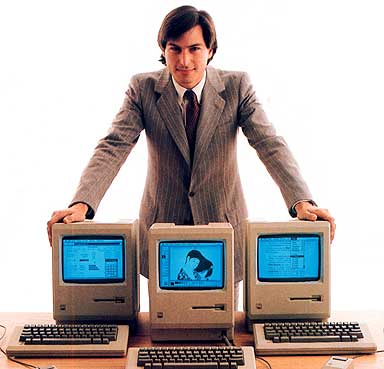

I would give the opposite advice. The easiest thing you can do to make people like you more, trust you more and respect your opinion more is to dress well and appropriately.
Job's outfit and Zuckerberg's hoodies work the same way (whether that was the intention or not, I think not). The same part of human brains that stupidly subconsciously judges people by the way they are dressed is doing the same thing with them. They show status by being able to openly reject the standard social expectations around clothes.
So call it a psychology hack or a life hack or whatever but if you are a founder of a startup then you are meeting and needing to impress a fair number of people. You can handicap yourself because you are convinced that it "shouldn't matter" or "this is the startup uniform" or you can be pragmatic about it and gain an edge for relatively minor effort.